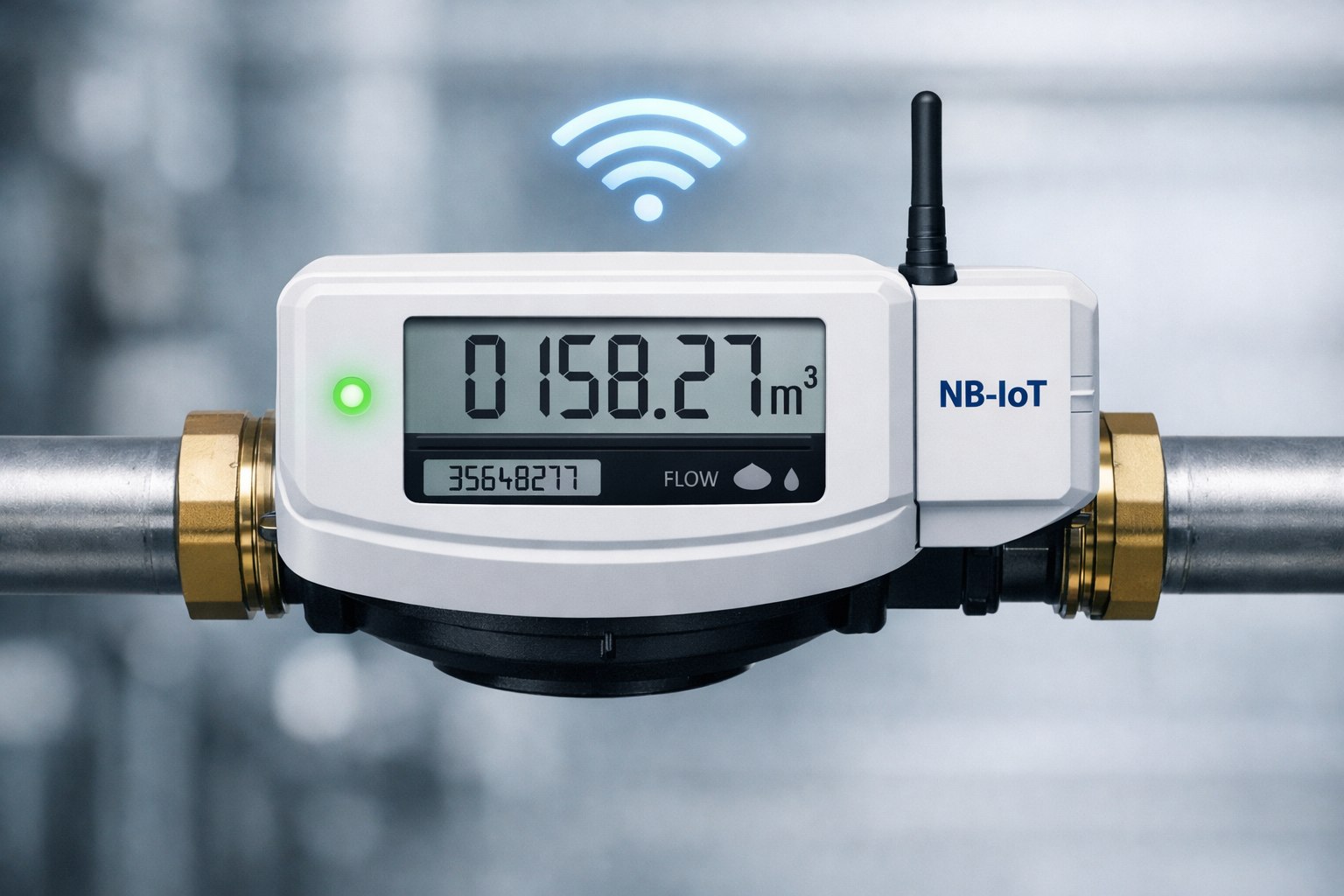
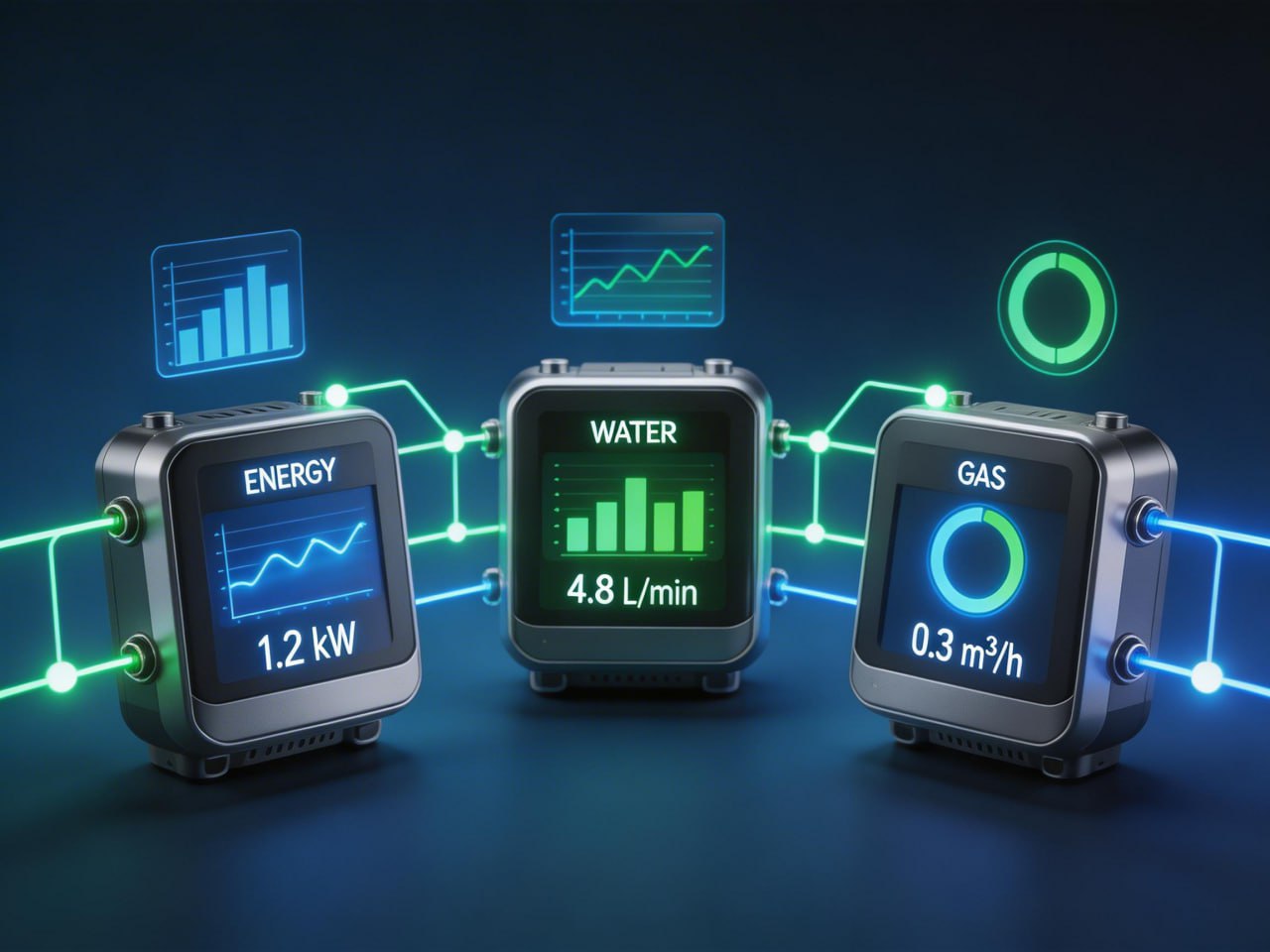
Smart metering projects across the UAE and the wider Middle East increasingly rely on cellular IoT to connect devices installed in buildings, utility cabinets, industrial sites and distributed infrastructure. The NB-IoT module turns a conventional meter into a connected endpoint: it reads consumption or status data and sends it through a mobile operator network to a billing, monitoring or dispatching platform. Choosing the right module affects battery replacement intervals, network compatibility, integration effort and long-term maintenance. This guide focuses on the device itself — the specifications and engineering criteria that matter before procurement.
What Is an NB-IoT Module and How It Works
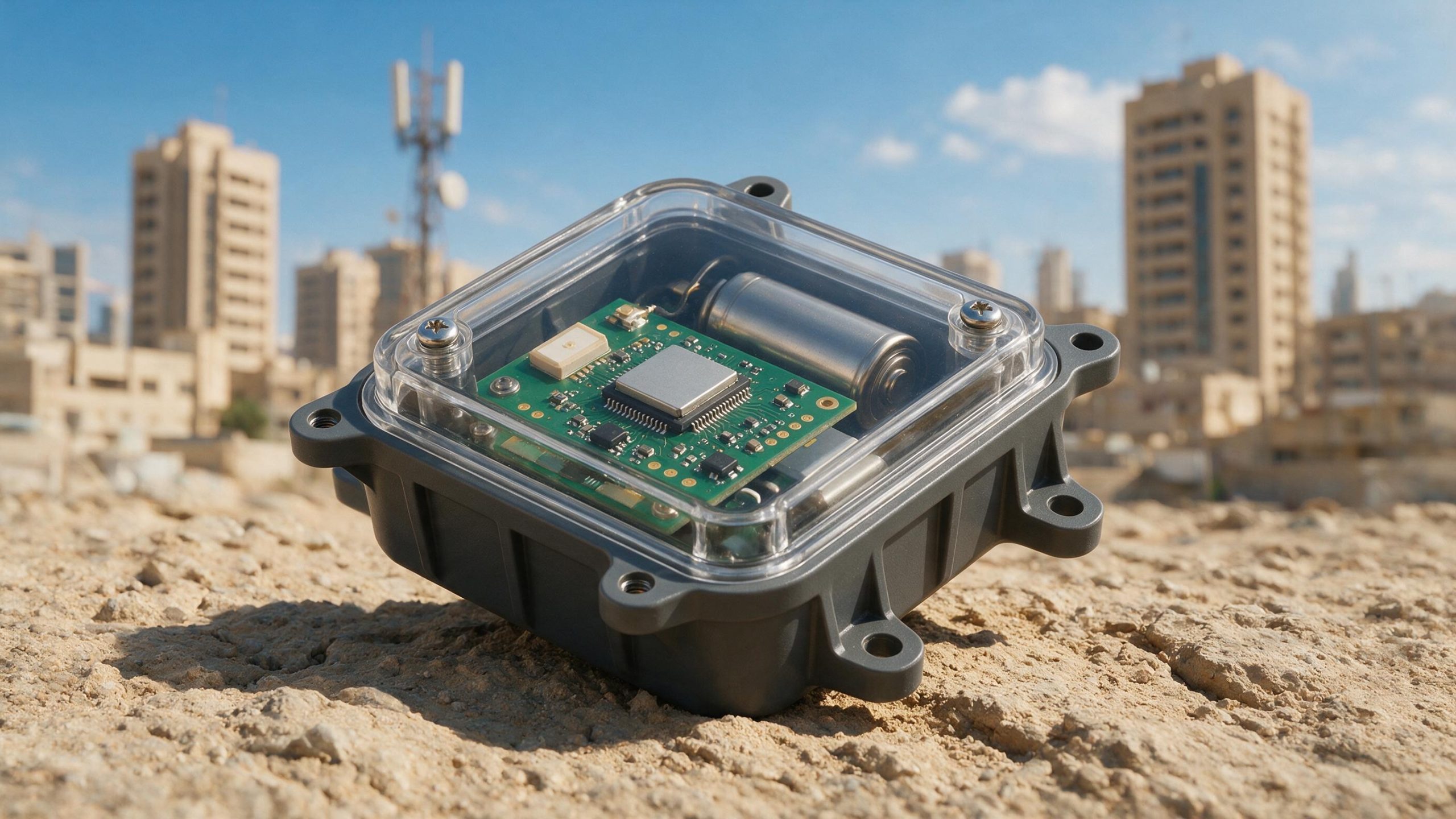
An NB-IoT module is a compact communication device that connects a meter, sensor or controller to a cellular Narrowband IoT network. In a smart metering installation, it receives readings from the host meter, processes the required data and transmits it through the operator’s network to the utility or industrial platform.
For retrofit applications, the module may be installed directly on a compatible water or gas meter. JCOM IoT’s NB-IoT smart module for water meters reads meter data and transfers it over cellular NB-IoT networks. The device can be used in automated commercial metering, monitoring and dispatching systems, Smart City projects and other IoT deployments.
The main advantage of an NB-IoT module for smart metering is that each endpoint communicates through existing operator infrastructure. If the project is still choosing between LPWAN technologies, see our guide to NB-IoT vs LoRaWAN; this article focuses only on selecting the NB-IoT device.
Key Technical Specifications
Frequency Bands
Band support must match the frequencies used by the mobile operator in the deployment country. A module that is mechanically suitable for a meter is still unusable if it cannot register on the target network.
JCOM IoT’s water meter module supports LTE bands B3, B8 and B20, corresponding to spectrum around 1800, 900 and 800 MHz. Before ordering, confirm the exact band plan with the operator rather than relying on a general statement that NB-IoT is available in the country.
Battery Life
Smart meters are expected to operate unattended for years, so power consumption is a core procurement criterion. A practical target is 10+ years of battery operation for low-duty-cycle metering devices when transmission intervals, signal conditions and retry rates are optimized.
Li-SOCl2 (lithium thionyl chloride) batteries are widely used in long-life metering devices because of their high energy density and low self-discharge. Real service life also depends on transmission frequency, coverage quality, temperature, modem current peaks and failed connection attempts.
The JCOM IoT water meter module uses a built-in 3.6 V lithium battery, while the product has a declared service life of at least 20 years. Battery strategy should therefore be calculated for the actual reporting profile.
Protocol Stack and MQTT
Protocol compatibility determines integration effort. The JCOM IoT module uses LTE Cat-NB1 and a 3GPP Release 13 NB-IoT protocol stack.
For projects that publish data into an IoT platform or message broker, an NB-IoT module with MQTT support can simplify application-layer integration. Check whether MQTT is implemented in module firmware or handled by an external controller or backend. Also confirm payload format, authentication and reconnect behavior, because these details influence reliability and power consumption.
Sensors and Tamper Detection
Metering equipment may need to report physical interference as well as consumption data. The JCOM IoT water meter module includes a magnetic exposure sensor and a module-removal sensor. When comparing devices, verify which tamper events are detected locally and which are transmitted to the backend.
Optional GNSS
An NB-IoT module with GNSS can be useful when an asset’s position must be verified automatically, especially for mobile, temporary or widely distributed infrastructure. GNSS adds cost and power consumption, so fixed metering points often do not need it. Choose the feature only when automated positioning provides a clear operational benefit.
Industrial-Grade vs Consumer Modules
An industrial NB-IoT module is designed for long-term operation under temperature, moisture and maintenance conditions that differ from those of development boards or consumer IoT devices.
Three parameters deserve particular attention. First is operating temperature: JCOM IoT’s smart water meter module is rated from −30 to +80 °C. Second is reliability: its specified average MTBF is 150,000 hours. Third is mechanical and environmental protection. The enclosure, sealing method, connectors and installation method must suit the meter location.
An industrial grade NB-IoT module should also have stable firmware, documented interfaces, predictable component availability and a clear service-life specification. IP protection matters when the complete device is exposed to dust or moisture, but it should be assessed at the level of the installed assembly.
For a broader view of available devices, see JCOM IoT’s NB-IoT equipment category.
What Determines NB-IoT Module Price
NB IoT module price depends on more than the cellular modem. Key factors include supported bands, industrial temperature range, battery architecture, enclosure design, tamper sensors, certification, antenna configuration, firmware functions, communication protocols, production volume and integration support.
A simple telemetry module for a controlled indoor environment can cost less than a sealed metering module expected to operate for years without maintenance. Optional GNSS and additional security or interface features can also increase unit cost.
Searching for the cheapest NB IoT module is rarely the right procurement strategy for a large rollout. A small saving per device can be erased by field visits, battery replacements, failed registration or custom integration work. Compare total lifecycle cost: device price, commissioning, connectivity, maintenance, replacement rate and engineering support.
For gas consumption monitoring, JCOM IoT also offers smart modules for gas meters.
Certification and Security
A certified NB-IoT module should be evaluated at several levels. Confirm compliance with radio and telecom requirements in the target market, compatibility with the selected mobile operator and any certifications required for the host meter or utility project. Operator approval can reduce the risk of unexpected registration or network behavior after rollout.
Security should be considered from device to backend. A secure NB-IoT module benefits from SIM-based cellular authentication, but this is only one layer. Review firmware update mechanisms, credential storage, access control, application-layer encryption where required, device identity management and backend authentication.
Do not treat “secure” as a single datasheet checkbox. Ask what is protected, how keys are provisioned, whether firmware can be updated safely and how compromised credentials or devices can be revoked.
Application Scenarios
Smart Metering
The most direct application is remote reading of water, gas and electricity consumption. Modules can send periodic readings, alarms and tamper events into automated accounting or dispatching systems, reducing dependence on manual collection.
For water projects in Gulf countries, regional implementation considerations are covered separately in our Smart water metering guide for GCC. The module-selection process described here applies more broadly across metering projects.
Smart Cities
An NB-IoT module for smart cities can connect distributed assets such as utility meters, environmental sensors and infrastructure monitoring points where operator coverage is available. Selection priorities remain the same: supported bands, power budget, enclosure, security, integration method and maintenance interval.
For city-scale deployments, standardizing on a small number of documented module types can simplify provisioning, backend integration, spare-parts management and field support.
Factory Automation
An NB-IoT module for factory automation is useful when low-bandwidth data must be collected from distributed equipment without extending wired networks to every point. Typical tasks include remote meter reading, equipment-state reporting, utility monitoring and alarms from auxiliary systems.
Industrial sites require extra attention to temperature, electromagnetic environment, antenna placement and cellular coverage inside metal structures. A site survey and pilot installation are usually more valuable than choosing from headline specifications alone.
Choosing the Right Module for Your Project
Start with the deployment environment and operator network, then work inward: frequency bands, meter interface, reporting interval, power source, expected service life, tamper functions, environmental protection, backend protocol, certification and security. Only after those requirements are fixed should price be compared.
For smart metering, the best module is not necessarily the one with the longest feature list. It is the one that can remain connected, powered, secure and maintainable for the full life of the deployment.
Need help selecting a module or validating a specification? Talk to a JCOM IoT engineer. We can review your meter type, target country, operator network, reporting profile and integration requirements and recommend a suitable configuration.