LPWAN adoption in utilities and industrial sectors is accelerating — particularly across the Middle East, South Asia, and Sub-Saharan Africa, where operators are deploying large-scale metering and monitoring networks for the first time rather than retrofitting legacy systems. At the centre of many of these projects sits an industrial LoRaWAN meter or sensor that must operate unattended for years in conditions that would destroy a consumer-grade device. This article covers what separates industrial LoRaWAN equipment from entry-level hardware, which device categories matter most, and what to look for in both the product and the supplier before committing to a purchase order.
What Makes a LoRaWAN Device Industrial-Grade
The difference between a consumer sensor and an industrial one rarely comes down to the radio chip. The LoRa transceiver inside may be identical. What changes is everything around it — and that is where most purchasing mistakes happen.
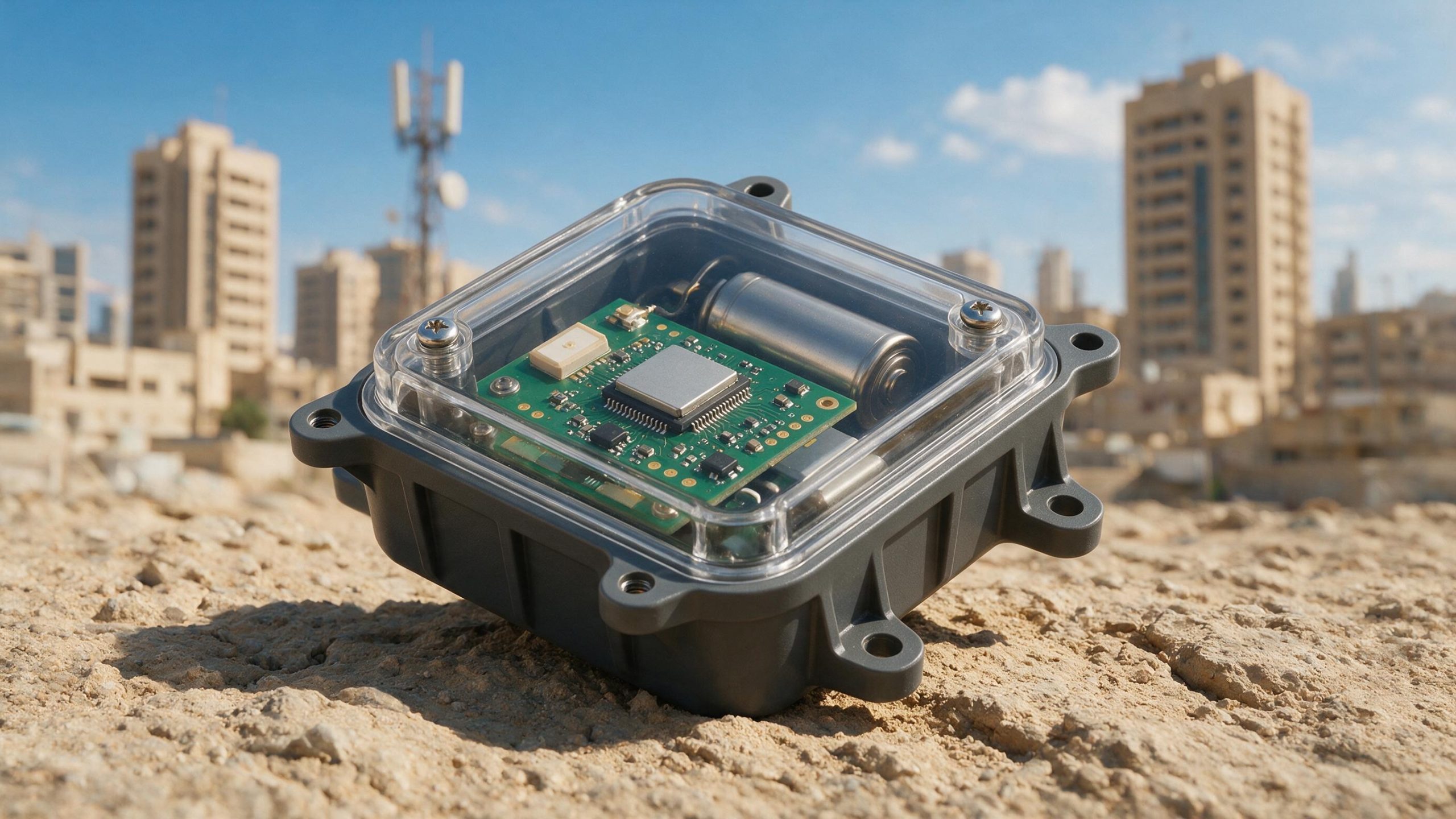
Enclosure and ingress protection. An industrial device needs a sealed housing rated IP54 or higher to survive dust, moisture, condensation, and the occasional wash-down. Lorawan industrial housing for sensors typically uses UV-stabilised polycarbonate or die-cast aluminium, with cable glands or sealed connectors replacing the open pin headers found on development boards. If a device is destined for outdoor deployment or a utility cabinet in a humid climate, anything below IP54 is a liability.
Operating temperature range. Consumer hardware usually specifies 0°C to +50°C. Industrial deployments — from rooftop cabinets in the Gulf to underground vaults in northern Europe — demand a wider envelope. A range of −40°C to +70°C is the benchmark for equipment expected to operate year-round without environmental control.
Battery life and MTBF. An industrial LoRaWAN device should deliver a field service life of at least 10 years on its primary power source, whether that is a lithium thionyl chloride battery or mains supply. Mean time between failures (MTBF) above 150,000 hours is the threshold that separates industrial-grade hardware from devices designed for shorter duty cycles. Below that number, maintenance and replacement costs erode the economic case for large-scale deployment.
Communication module architecture. In well-designed industrial meters, the LoRaWAN radio is a modular component — installable and replaceable without removing the host device from service. This modularity matters operationally: if a frequency plan changes or a module fails, the field team replaces the module rather than the entire meter.
Types of Industrial LoRaWAN Equipment
Smart Meters
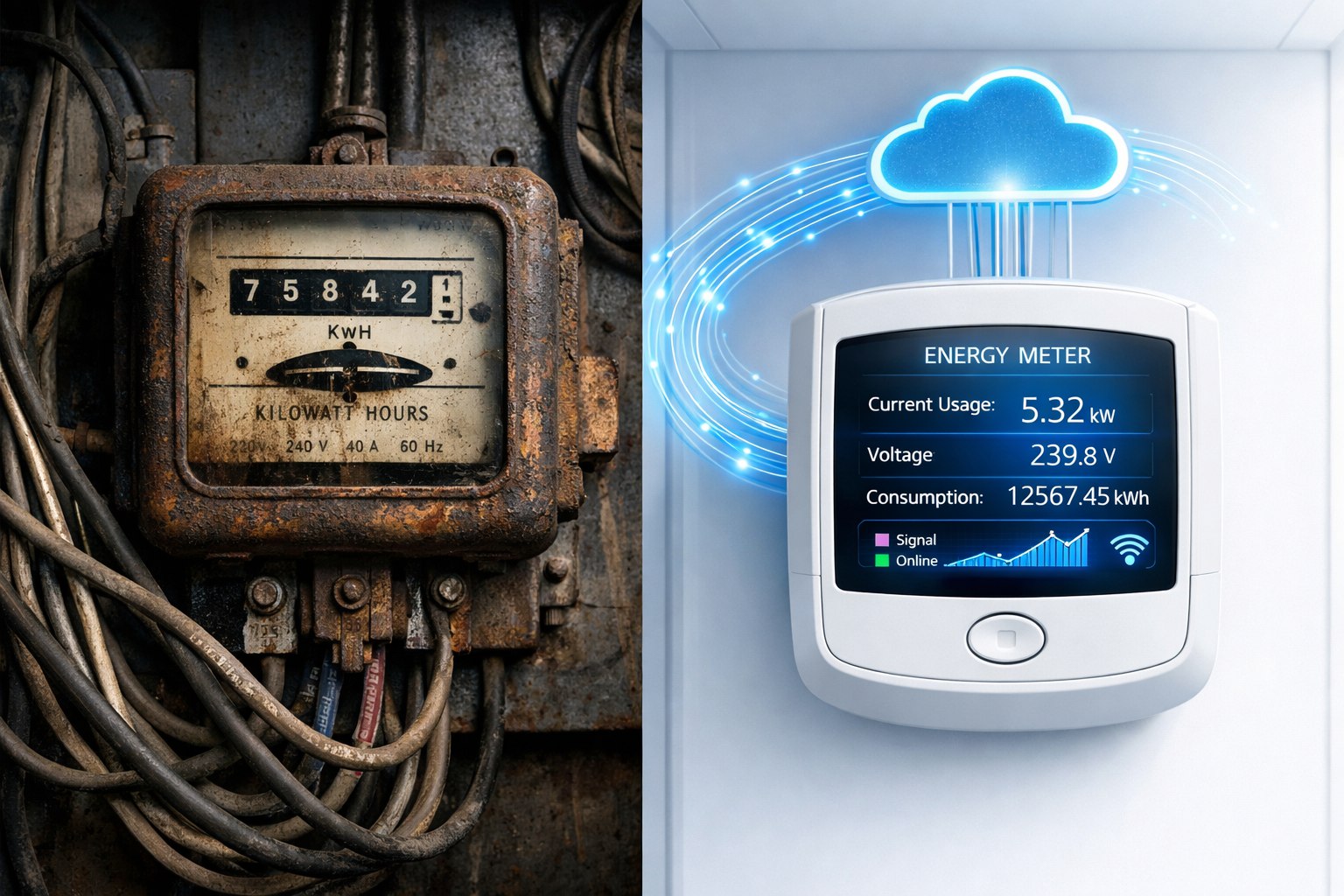
Electricity metering is the most established application for a lorawan smart meter in utility-scale deployments. A single-phase or three-phase meter with an integrated LoRaWAN module reports consumption data, tariff profiles, tamper events, and power quality parameters directly to a network server — no concentrator, no SIM card, no recurring operator fees.
The Single-phase electricity meter AIST A100 H LoRaWAN is a representative example. The meter operates across a frequency range of 863–870 MHz, measures active and reactive energy at accuracy class 1, supports up to four tariff zones, and stores 90 days of consumption history locally. With a rated MTBF of 160,000 hours, an operating range of −40°C to +70°C, and IP54 enclosure protection in the SPODES variant, it is engineered for long-term unattended operation in utility distribution networks. Data exchange uses open industrial protocols — SNMP, MQTT, and MODBUS — ensuring integration with any SCADA platform or IoT server without proprietary middleware.
Gas and water metering modules also operate over LoRaWAN, though the architecture differs: a wireless module attaches to an existing mechanical meter body and transmits pulse-count data to the network server.
Environmental and Office Sensors
Indoor environment sensors represent a growing LoRaWAN segment, particularly in commercial buildings and campus facilities. Multi-parameter devices measuring temperature, humidity, atmospheric pressure, light intensity, and CO₂ concentration transmit readings at configurable intervals via LoRaWAN, feeding building management dashboards or triggering HVAC adjustments. These sensors are battery-powered, compact, and designed for wall or ceiling mounting. Because they operate indoors, enclosure ratings are less critical — but battery longevity and calibration stability remain genuine differentiators between products.
Weather Stations with LoRaWAN
Field-deployed weather monitoring is another area where LoRaWAN connectivity adds clear value. An automatic weather station lorawan configuration transmits temperature, humidity, pressure, wind, and precipitation data from sites with no mains power and no cellular coverage — agricultural plots, construction sites, remote environmental monitoring points. The station operates on solar-charged battery power and feeds data to a gateway within range, eliminating both the infrastructure cost and recurring fees associated with cellular-connected alternatives.
When LoRaWAN Is the Right Choice
LoRaWAN earns its place in a project when one or more of the following conditions apply.
You need to own the network. If your organisation requires full control over data flow — from end device through gateway and network server to application layer — LoRaWAN provides that without dependency on a mobile operator. This matters in defence, critical infrastructure, and any environment where third-party network outages are unacceptable.
Cellular coverage is absent or unreliable. Rural utility networks, agricultural zones, remote industrial sites, and mining operations frequently sit outside the footprint of a cellular LPWAN service. A self-deployed LoRaWAN gateway fills that gap at a fixed infrastructure cost.
The device count runs into thousands. LoRaWAN’s economics improve with scale. There are no per-device SIM costs, no monthly data plans, and a single gateway can serve thousands of nodes. At volumes above a few hundred endpoints, the total cost of ownership tilts decisively toward LoRaWAN compared to SIM-based alternatives.
Campus or industrial zone coverage is the primary topology. Factories, logistics yards, port facilities, university campuses, and utility distribution zones are natural LoRaWAN topologies. A small number of strategically placed gateways can blanket the entire operational area.
For a detailed side-by-side comparison of LoRaWAN against cellular LPWAN alternatives, including guidance on when each protocol fits best, see our engineering article NB-IoT vs LoRaWAN: Which Technology is Right for Your IoT Project.
How to Evaluate a Supplier
Selecting the right device is half the decision. Selecting the right lorawan distributor is the other half — and the one that determines whether your deployment proceeds smoothly or stalls on procurement delays, configuration gaps, or integration friction.
Frequency plan support. LoRaWAN operates on region-specific ISM bands: EU868 for Europe and the Middle East, AS923 for Southeast Asia, AU915 for Australia and parts of Latin America. Confirm that the supplier’s devices ship with firmware configured for your target frequency plan — not just the hardware capability, but verified, tested compliance with regional regulatory requirements.
Device class documentation. LoRaWAN defines three device classes — A, B, and C — each with different trade-offs between latency, battery consumption, and downlink availability. A qualified supplier provides clear documentation of which class each device supports and the practical implications for your use case. Class A covers the majority of metering and sensor applications; Class C is required for devices that must receive downlink commands at any time (such as relay-controlled meters or actuators).
Integration support. Industrial LoRaWAN hardware needs to work within your existing platform stack — whether that is ChirpStack, The Things Network, a commercial IoT platform, or a self-hosted SCADA system. Evaluate whether the supplier provides codec definitions, payload decoders, and tested integration guides for the platforms you operate. Without these, every device type becomes a custom integration project.
Logistics and lead times. For projects deploying hundreds or thousands of units, warehouse proximity and stock availability matter as much as technical specifications. JCOM IoT maintains industrial LoRaWAN equipment in a regional warehouse in Dubai (UAE), supporting delivery across the Middle East, Central Asia, and Africa without the lead times associated with factory-direct shipment from manufacturing facilities.
After-sales engineering access. A product datasheet answers the first round of questions. The second round — antenna placement for specific building materials, optimal transmission intervals for battery life targets, gateway density planning for a 50-hectare site — requires access to engineers who have deployed the hardware in the field. Prioritise suppliers who provide direct engineering consultation over those who route technical queries through a general sales desk.
Need help specifying LoRaWAN meters, sensors, or gateways for your project? Talk to an engineer — we respond within one business day with a technical recommendation tailored to your deployment environment, device count, and platform requirements.