Weather is not just small talk — it’s a serious operational variable that affects industries ranging from agriculture and logistics to construction and event management. Yet many businesses still rely on general forecasts pulled from consumer apps or regional meteorological services that may be miles away from their actual location. The difference between generic data and hyper-local precision can cost companies thousands of dollars in avoidable losses. That’s exactly why professional weather stations have become an essential investment for forward-thinking businesses that take operational efficiency seriously.
Weather Data Is Business Data
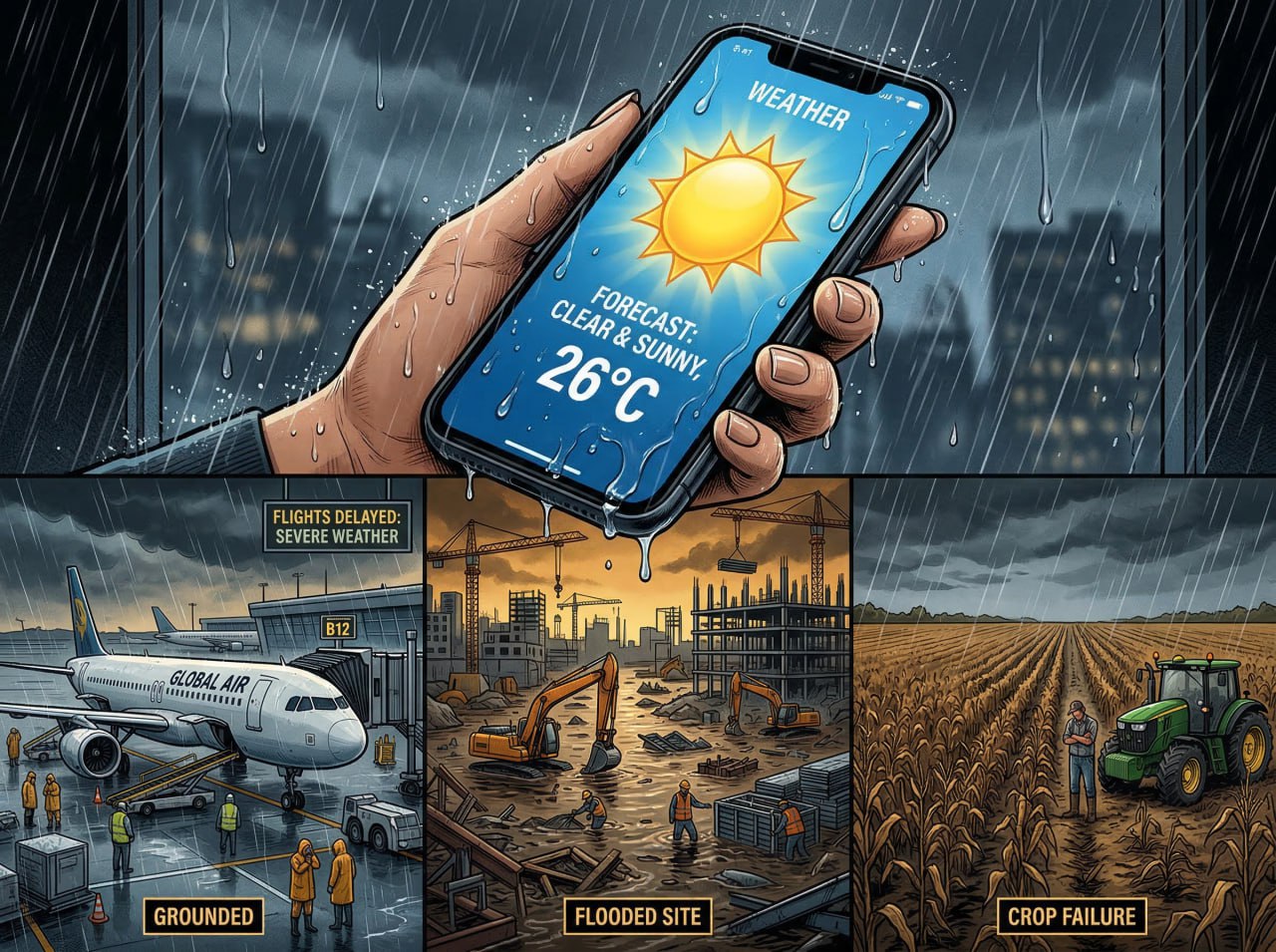
Think about what weather actually influences on a day-to-day business level. Temperature affects how materials behave on a construction site. Wind speed determines whether it’s safe to operate heavy crane equipment. Humidity impacts the quality of products stored in warehouses. Precipitation data shapes delivery route planning. The list goes on — and in every single case, the accuracy of that weather information directly translates into smarter, safer, and more profitable decisions.
Consumer-grade weather tools simply weren’t designed with these demands in mind. They measure broadly, update infrequently, and lack the sensor precision that professional environments require. A business operating without dedicated, on-site monitoring is essentially flying blind, trusting data collected from a station that might be located in a completely different microclimate — across a river, on the other side of a hill, or in an urban heat island with no relation to your facility’s real conditions.
A professional weather station installed on your premises gives you something invaluable: truth. Your truth. Real-time, location-specific, high-resolution truth.
Industries That Benefit Most
While virtually any business with outdoor exposure gains something from dedicated weather monitoring, certain industries see transformational returns on this investment:
- Agriculture and viticulture — Farmers and vineyard owners depend on precise frost alerts, soil temperature monitoring, and rainfall measurement to protect crops and optimize irrigation schedules. Missing a frost warning by even a few degrees can wipe out an entire season’s yield.
- Construction and civil engineering — Site managers need reliable wind, temperature, and precipitation data to schedule work safely, comply with occupational health regulations, and avoid costly delays caused by weather-related accidents or material failures.
- Event management and outdoor venues — Whether it’s a music festival, a sports tournament, or a corporate outdoor gathering, event organizers need real-time lightning detection, wind gust alerts, and rain probability tracking to make split-second decisions about audience safety and schedule adjustments.
Beyond these core industries, logistics companies use weather stations to optimize last-mile delivery windows, energy providers monitor wind and solar conditions to balance grid output, and airports rely on them for precise runway condition assessment. The common thread is simple: better data leads to better decisions.
The Hidden Cost of “Good Enough” Weather Data
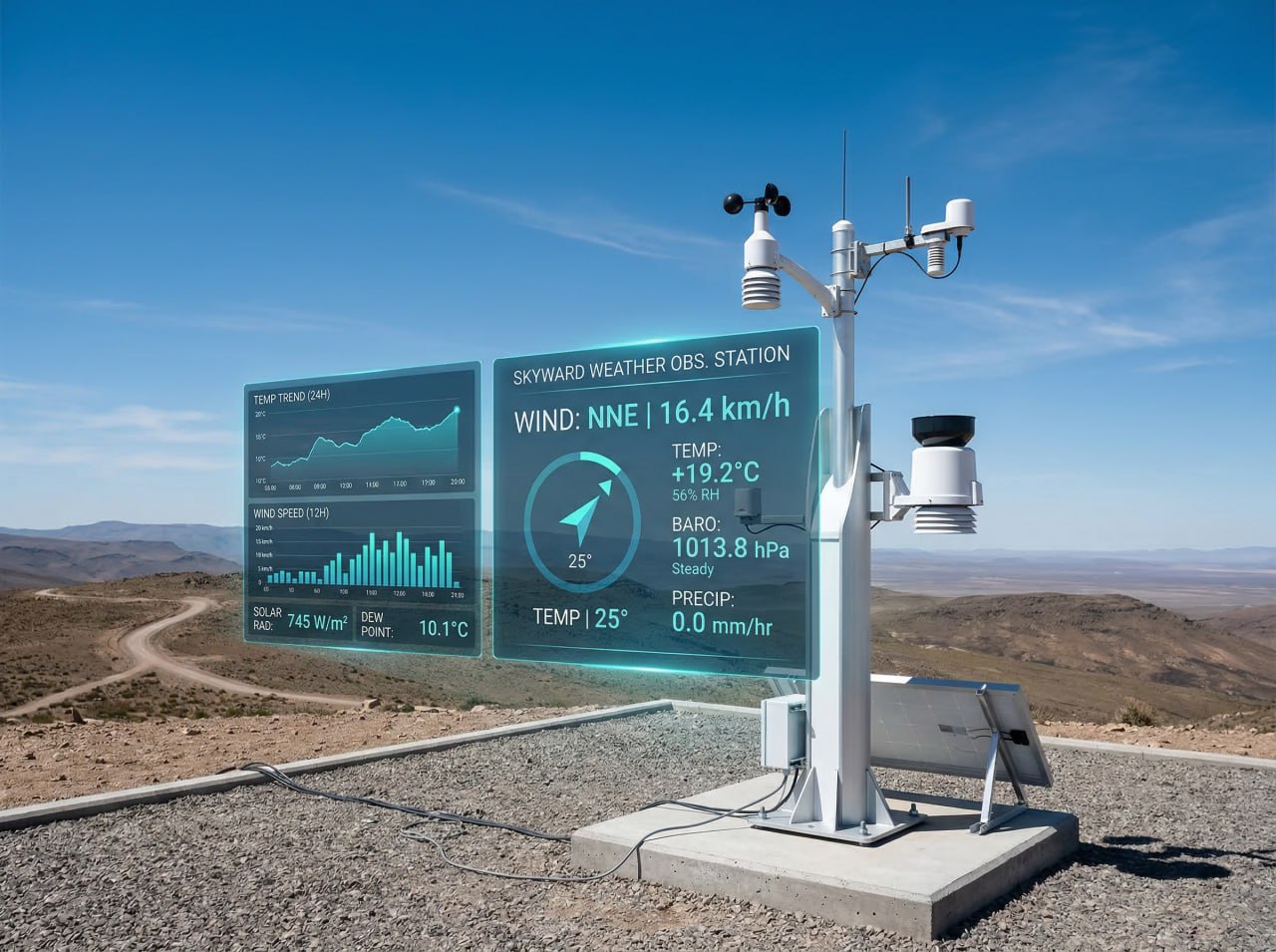
There’s a widespread misconception that a nearby public weather station or a smartphone app provides “good enough” data for business purposes. This assumption is rarely stress-tested until something goes wrong — and by then, the damage is done.
Microclimates are real and they are significant. A valley farm can experience temperatures 5–8°C lower than a town just three kilometers away. A coastal warehouse may face wind gusts that regional forecasts entirely miss. Industrial facilities create their own localized atmospheric effects that no regional station can account for.
The financial exposure here is not abstract. Crop losses, delayed construction timelines, cancelled events, damaged goods in transit — all of these are traceable, in part, to the gap between generic weather forecasts and on-site reality. When you calculate the cost of a single major incident against the cost of a professional monitoring system, the return on investment becomes remarkably clear.
Beyond loss prevention, there’s also the compliance dimension. Many industries are subject to regulatory requirements around weather monitoring — particularly in aviation, chemical handling, and offshore operations. A certified professional weather station isn’t just a smart business tool; in some contexts, it’s a legal necessity.
Precision, Reliability, and Integration
Modern professional weather stations are not the bulky, maintenance-heavy instruments of decades past. Today’s systems are compact, highly durable, and built for seamless integration with business software ecosystems. Data can be streamed in real time to dashboards, ERP systems, safety management platforms, or custom alert workflows — meaning your team gets the right information at the right moment, automatically.
Look for stations that offer multi-parameter monitoring (wind, temperature, humidity, pressure, precipitation, UV index, and solar radiation), robust data logging capabilities, and industrial-grade build quality suited to the harshest environments. Connectivity options — from Wi-Fi and cellular to RS485 and Modbus — ensure compatibility with existing infrastructure regardless of how remote or complex your site may be.
Investing in a professional weather station is, at its core, an investment in decision quality. In a business landscape where margins are tight and risks are everywhere, the ability to act on precise, real-time environmental data isn’t a luxury — it’s a competitive edge.