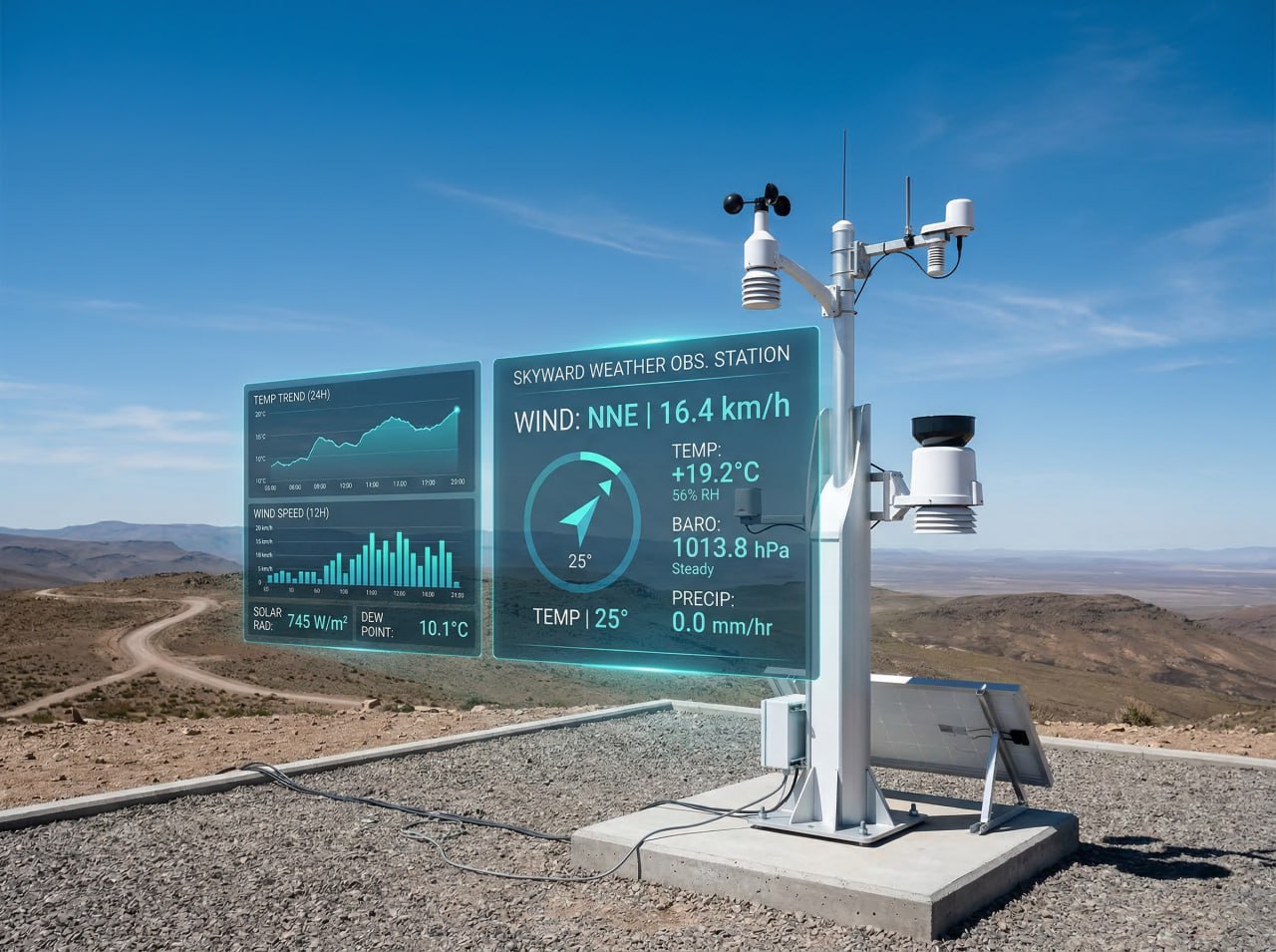
Imagine a symphony orchestra where every musician plays from a slightly different clock. The violins rush ahead. The brass section lags behind. The result isn’t music — it’s chaos. Industrial IoT networks are no different. Thousands of sensors, controllers, edge devices, and cloud platforms must all operate in perfect temporal harmony. When they don’t, the consequences range from inefficient operations to catastrophic failures.
Yet time synchronization remains one of the most underestimated pillars of industrial infrastructure. Companies invest heavily in hardware, connectivity, and data analytics — and then overlook the fact that all of that data is essentially useless if it isn’t accurately timestamped.
The Hidden Cost of Clock Drift

Every device has an internal clock, and every internal clock drifts. It’s a physical inevitability — oscillator crystals age, temperatures fluctuate, and over time even the most precise components fall out of step with reality. In a consumer gadget, a few seconds of drift per day is barely noticeable. In an industrial IoT environment, it can be catastrophic.
Consider a manufacturing line where a temperature sensor and a pressure sensor are monitoring the same process. If their clocks are out of sync by even 200 milliseconds, the data they generate can’t be reliably correlated. Engineers trying to diagnose a fault see a confusing picture where cause and effect appear reversed. A pressure spike seems to precede a temperature surge that actually caused it. Decisions made on that data are, at best, suboptimal — and at worst, dangerous.
The problem scales dramatically in large deployments. An industrial facility might run tens of thousands of endpoints across multiple network segments, buildings, or even geographic locations. Without a centralized, accurate time source governing all of them, the facility is essentially operating with tens of thousands of slightly different realities.
Real-World Applications Where Timing Is Everything
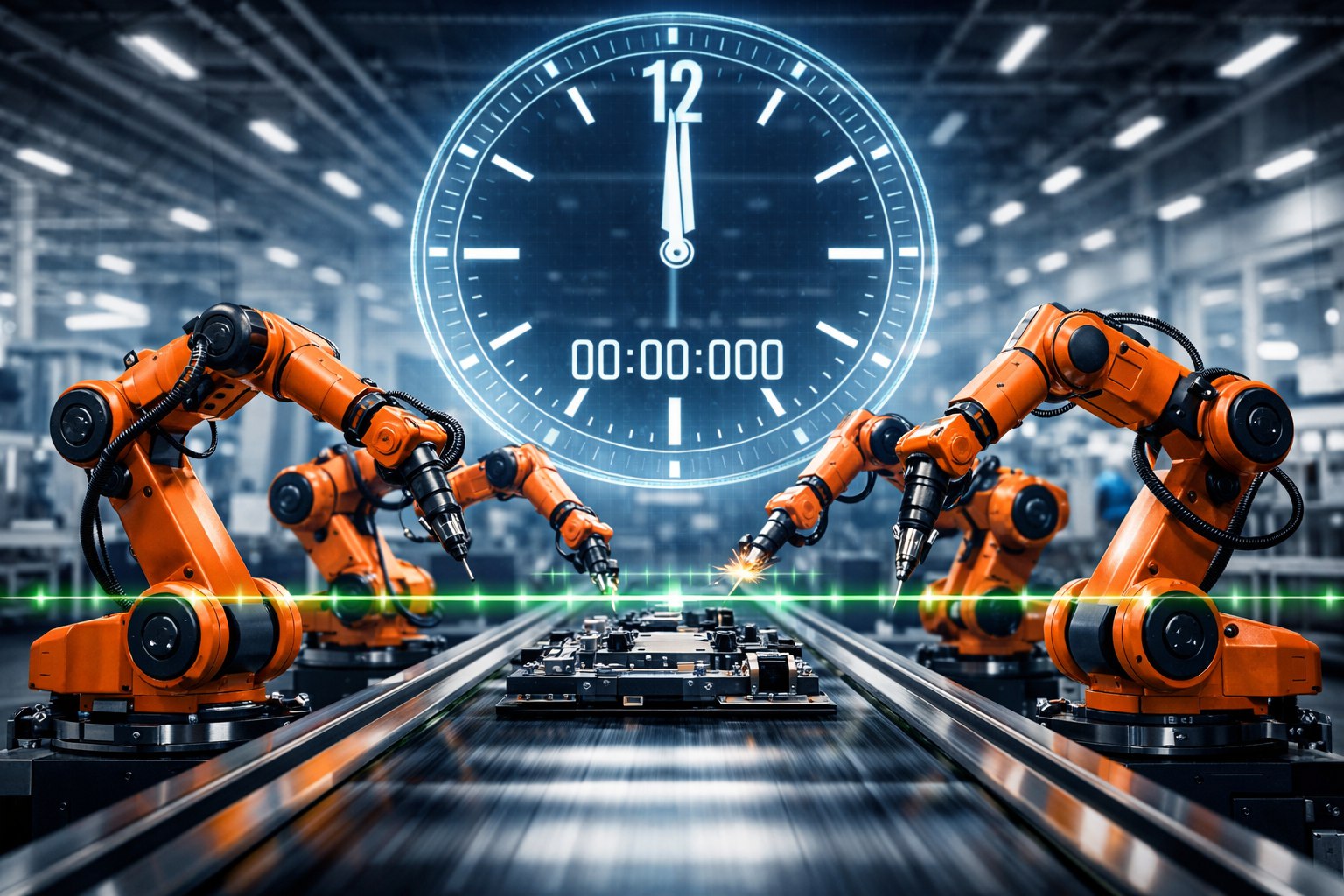
Time synchronization isn’t an abstract engineering concern. It has direct, measurable impact across a wide range of industrial verticals. Here are just a few areas where precision timing determines success or failure:
- Predictive maintenance: Vibration sensors, thermal cameras, and acoustic monitors generate streams of data that must be correlated precisely. A misaligned timestamp can make a developing fault invisible — or trigger false alarms that cost thousands in unnecessary downtime and labor.
- Energy grid management: Smart grids rely on Precision Time Protocol (PTP) or GPS-based synchronization accurate to microseconds. Errors in time can lead to incorrect load balancing, protection relay misoperation, or even cascading grid failures that affect entire regions.
- Automated quality control: On high-speed production lines, robotic inspection systems must match visual data with product position data in real time. A few milliseconds of desynchronization can mean the difference between a flawless product and a defective one shipping to a customer.
These examples illustrate a fundamental truth: in Industrial IoT, time isn’t just metadata. It’s the axis along which all operational intelligence is organized.
Protocols, Standards, and Best Practices
The good news is that the industry has mature, well-tested solutions for achieving accurate time synchronization. The Network Time Protocol (NTP) has been a workhorse for decades, offering millisecond-level accuracy across IP networks. For environments demanding higher precision, the IEEE 1588 Precision Time Protocol (PTP) delivers sub-microsecond accuracy over local networks — making it the standard of choice for power systems, telecommunications, and advanced manufacturing.
Beyond choosing the right protocol, organizations need to think about architecture. A robust time synchronization design typically includes redundant time sources (to eliminate single points of failure), boundary clocks and transparent clocks to preserve accuracy across network hops, and continuous monitoring to detect and alert on drift before it causes problems.
Cybersecurity is another layer that’s easy to overlook. A spoofed or manipulated time signal can wreak havoc across an entire network. Secure NTP (NTS) and authenticated PTP implementations are becoming increasingly important as industrial networks face growing threat landscapes.
Closing the Loop: Time as a Strategic Asset
Accurate time synchronization is not a checkbox on a deployment form. It is the invisible infrastructure that makes every other investment in Industrial IoT actually work. When timestamps are trustworthy, data becomes intelligence. When data becomes intelligence, operations become genuinely optimized — not just theoretically, but in measurable uptime, throughput, safety, and cost.
Organizations that treat time synchronization as a strategic priority consistently find that their analytics are sharper, their diagnostics are faster, and their compliance reporting is cleaner. Those that don’t tend to discover the problem the hard way: through a post-incident review where no one can agree on what happened first.
In industrial environments, every second counts. Make sure all your systems agree on what a second actually is.