As IoT deployments accelerate across the UAE, Saudi Arabia, and the wider Middle East region, one question comes up consistently in engineering conversations: should we build on NB-IoT or LoRaWAN? Both belong to the LPWAN technology family, both are designed for low-power, wide-area IoT device connectivity — and yet they solve different problems in fundamentally different ways. Choosing the wrong one early can mean costly infrastructure rework down the line. This article breaks down how each technology works, where each excels, and how to make the right call for your specific project.
What Is NB-IoT and How Does It Work
NB-IoT (Narrowband Internet of Things) is a licensed wireless IoT protocol that operates within existing cellular network bands. It was standardized by 3GPP and is deployed by mobile operators on the same infrastructure used for LTE and 5G networks. Data is transmitted over licensed spectrum, which means interference is controlled and quality of service is guaranteed by the operator. NB-IoT is designed for devices that send small amounts of data infrequently — think a smart electricity meter reporting consumption every 15 minutes, or a valve sensor confirming its status once an hour. The protocol prioritizes deep indoor penetration, long battery life, and reliability over raw speed.
NB-IoT Key Specifications and Coverage
- Frequency: Licensed LTE bands (varies by region and operator)
- Range: Up to 10–15 km in open areas; strong signal penetration into basements and dense urban structures
- Data rate: 20–250 kbps (downlink/uplink)
- Latency: Typically 1.6–10 seconds
- Battery life: Up to 10 years on AA cells with optimized transmission schedules
- Network: Requires mobile operator infrastructure (SIM-based)
- Security: Operator-managed, end-to-end encryption via cellular standards.
NB-IoT range and indoor penetration are among the strongest in the LPWAN category, making it particularly well-suited for dense urban deployments where devices may be installed in basements, underground vaults, or inside reinforced concrete structures.
What Is LoRaWAN and How Does It Work
LoRaWAN (Long Range Wide Area Network) is an open, license-free wireless IoT protocol built on LoRa modulation technology developed by Semtech. Unlike NB-IoT, LoRaWAN does not depend on cellular operators — networks are deployed independently using LoRaWAN gateways connected to a network server, either self-hosted or cloud-based (such as ChirpStack or The Things Network).
This architecture gives deployers full control over their network. A single LoRaWAN gateway can cover several kilometers in open terrain and connect thousands of end devices simultaneously. LoRaWAN is particularly popular in scenarios where cellular coverage is absent, operator costs are prohibitive, or the operator simply wants to own the entire network stack.
LoRaWAN Key Specifications and Coverage
- Frequency: License-free ISM bands (868 MHz in Europe, 915 MHz in the Americas, 923 MHz in Asia-Pacific)
- Range: 2–5 km in urban environments; 15+ km in rural or open areas
- Data rate: 0.3–50 kbps (adaptive data rate)
- Latency: Seconds to minutes depending on class (Class A, B, or C)
- Battery life: Up to 10 years depending on transmission frequency
- Network: Self-deployed or community networks; no SIM required
- Security: AES-128 encryption at network and application layers
LoRaWAN coverage scales with the number of gateways deployed, giving organizations the flexibility to expand incrementally as their device footprint grows.
NB-IoT vs LoRaWAN: Head-to-Head Comparison
Range and Signal Penetration
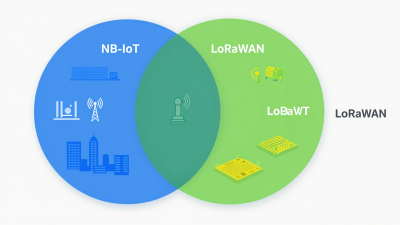
Both technologies offer impressive range by LPWAN standards, but in different environments. NB-IoT performs better in dense urban settings with deep indoor requirements — basement meters, underground infrastructure, and multi-story buildings. LoRaWAN holds the advantage in rural, agricultural, and open industrial environments where cellular coverage may be sparse but a locally deployed gateway can provide LoRaWAN coverage across a wide area.
Power Consumption and Battery Life
Both are optimized for low power consumption, and in practice, battery life depends more on transmission frequency and payload size than on the protocol itself. That said, NB-IoT’s Power Saving Mode (PSM) and extended Discontinuous Reception (eDRX) features allow devices to remain dormant for extended periods, achieving comparable results to LoRaWAN in many metering applications.
Data Rate and Latency
NB-IoT offers higher data throughput and more predictable latency, which matters for applications requiring firmware-over-the-air (FOTA) updates or near-real-time status reporting. LoRaWAN’s lower data rate is sufficient for most sensor applications but makes large payload transfers impractical. For industrial IoT wireless applications requiring reliable command-response cycles, NB-IoT has a clear edge.
Network Infrastructure Requirements
This is often the deciding factor. NB-IoT runs on existing mobile operator networks — deployment requires no gateway infrastructure, just SIM cards and operator agreements. LoRaWAN requires the deployment and maintenance of LoRaWAN gateways, a network server, and application layer integration. That is additional upfront work, but it also means no recurring operator fees and no dependency on third-party network availability.
Cost of Deployment
NB-IoT involves per-device SIM costs and ongoing data plan fees paid to the mobile operator. LoRaWAN has higher upfront infrastructure costs (gateways, server setup) but near-zero ongoing connectivity costs per device. For large-scale deployments — thousands of devices over many years — LoRaWAN often delivers a lower total cost of ownership. For smaller, fast-to-deploy projects where operator coverage already exists, NB-IoT may be more economical to launch.
When to Choose NB-IoT
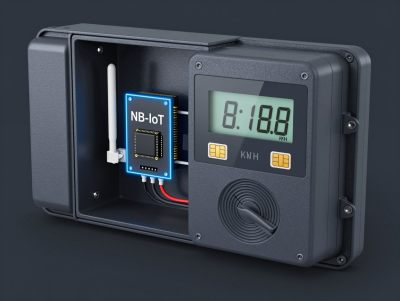
NB-IoT is the right choice when you need guaranteed connectivity without building your own network, when devices are installed in challenging indoor environments, and when your application demands reliable two-way communication with predictable latency. It is also the better option in regions where licensed cellular coverage is strong and operator IoT data plans are competitively priced.
If your project involves NB-IoT modules for industrial applications where network uptime and operator SLA guarantees are non-negotiable, NB-IoT provides a level of assurance that self-deployed networks cannot easily match.
Best Use Cases for NB-IoT — Smart Metering, Utility Monitoring, Asset Tracking
NB-IoT for smart metering is one of the most established and widely deployed applications of the technology. Electricity, water, and gas meters installed inside buildings benefit directly from NB-IoT’s superior indoor penetration. Smart electricity meters with NB-IoT interface can report consumption data, detect tampering, and receive remote commands without any gateway infrastructure on the customer’s side.
Other strong NB-IoT use cases include utility pipeline monitoring, urban asset tracking (manholes, waste bins, street furniture), parking sensors in multi-level structures, and cold chain monitoring inside refrigerated warehouses.
When to Choose LoRaWAN
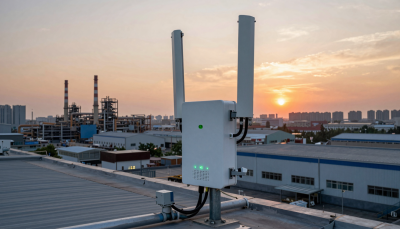
LoRaWAN is the right choice when you need full control over your network, when cellular coverage is unreliable or absent, when per-device connectivity costs need to be minimized at scale, or when you are building a multi-tenant IoT platform where different clients share the same gateway infrastructure.
For projects that benefit from community networks or open-source server stacks, LoRaWAN gateways and modules offer a flexible foundation that can be adapted to a wide range of topologies — from a single private campus network to a city-wide deployment serving multiple verticals simultaneously.
Best Use Cases for LoRaWAN — Smart Cities, Agriculture, Environmental Monitoring
LoRaWAN for smart city applications is well established: street lighting control, air quality monitoring, flood sensors, waste level detection, and public infrastructure management all benefit from the low cost per node and the ability to blanket a city with a relatively small number of gateways.
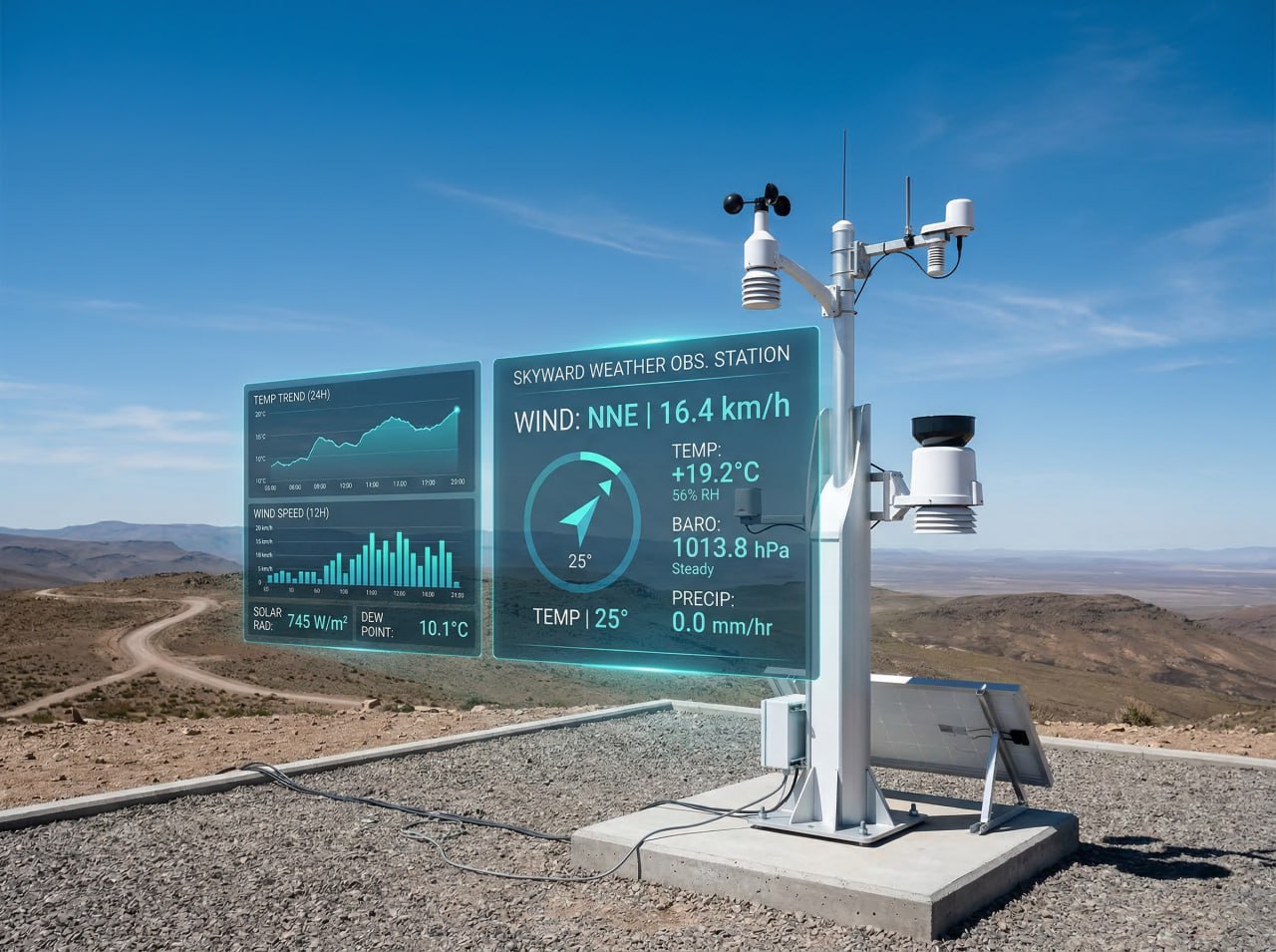
In agriculture, LoRaWAN enables soil moisture monitoring, irrigation control, livestock tracking, and microclimate sensing across large plots of land where cellular coverage is often inconsistent. Environmental monitoring networks — river level sensors, weather stations, seismic arrays — are another natural fit given the low power requirements and the ability to operate without grid power.
NB-IoT vs LoRaWAN for Smart Cities: Why Leading Cities Use Both
Smart city projects rarely fit a single connectivity model, because a city is not one use case — it is dozens of them running side by side. Utility metering, street lighting, environmental sensing and flood detection each place different demands on coverage, reliability and operating cost.
In practice, NB-IoT is the stronger choice for municipal utility metering — gas, water and electricity meters installed in basements, utility rooms and dense residential blocks, where licensed-spectrum reliability and deep indoor penetration are non-negotiable. LoRaWAN, in turn, excels across parks, riverbanks and public spaces: environmental monitoring stations, flood detection sensors and smart street lighting benefit from city-owned gateways, decade-long battery life and zero per-device subscription fees.
This is why the most successful smart city deployments are hybrid. Cities use NB-IoT where carrier-grade SLAs and indoor coverage matter most, and run their own LoRaWAN network where data ownership and low cost per node take priority. The result is an architecture that matches the right protocol to each urban problem, instead of forcing every application onto a single radio technology.
Which Technology Is Right for Your Project
There is no universal answer — the right LPWAN technology depends on your deployment environment, budget structure, network ownership preference, and the specific performance requirements of your application.
Decision Checklist
Use this to guide your initial assessment:
| Criteria | NB‑IoT | LoRaWAN |
|---|---|---|
| Network infrastructure | Operator available, no self‑deploy | Must own or avoid operator dependency |
| Indoor / underground installation | Yes | Limited |
| Device count | Hundreds to thousands | Thousands to hundreds of thousands |
| Two‑way communication | Required | Minimal or Class C only |
| Ongoing cost model | Per‑device SIM fee acceptable | Prefer zero recurring cost |
| Rural / open area coverage | Operator coverage available | Preferred |
| FOTA updates needed | Yes | Small payloads only |
| Open‑source stack preferred | No | Yes |
If you are still uncertain after working through the checklist, the most reliable next step is a consultation with engineers who have hands-on deployment experience with both technologies across different industries and regions.
Not sure which protocol fits your project? Contact our engineers to select the right IoT connectivity solution — we’ll assess your requirements and recommend the optimal architecture based on your environment, scale, and budget.